
Migrate Your MS Access(*.mdb; *.accdb) Data to MySQL – Effortlessly!
This clear guide demonstrates how to transfer your data from MS Access to MySQL efficiently using ESF Database Migration Toolkit.- Execute a step-by-step, reliable migration process.
- Simplify complex data transfers with an intuitive tool.
- Save significant time and effort with automation.
- Modernize your data infrastructure with ease.
Prerequisite:
Software Required:
ESF Database Migration Toolkit »System Supported:
- Windows 7 or higher.
- MS Access 97 or higher.
- MySQL 3.23 or higher.
Step by Step Wizard:
-
Configure Microsoft Access Data Source
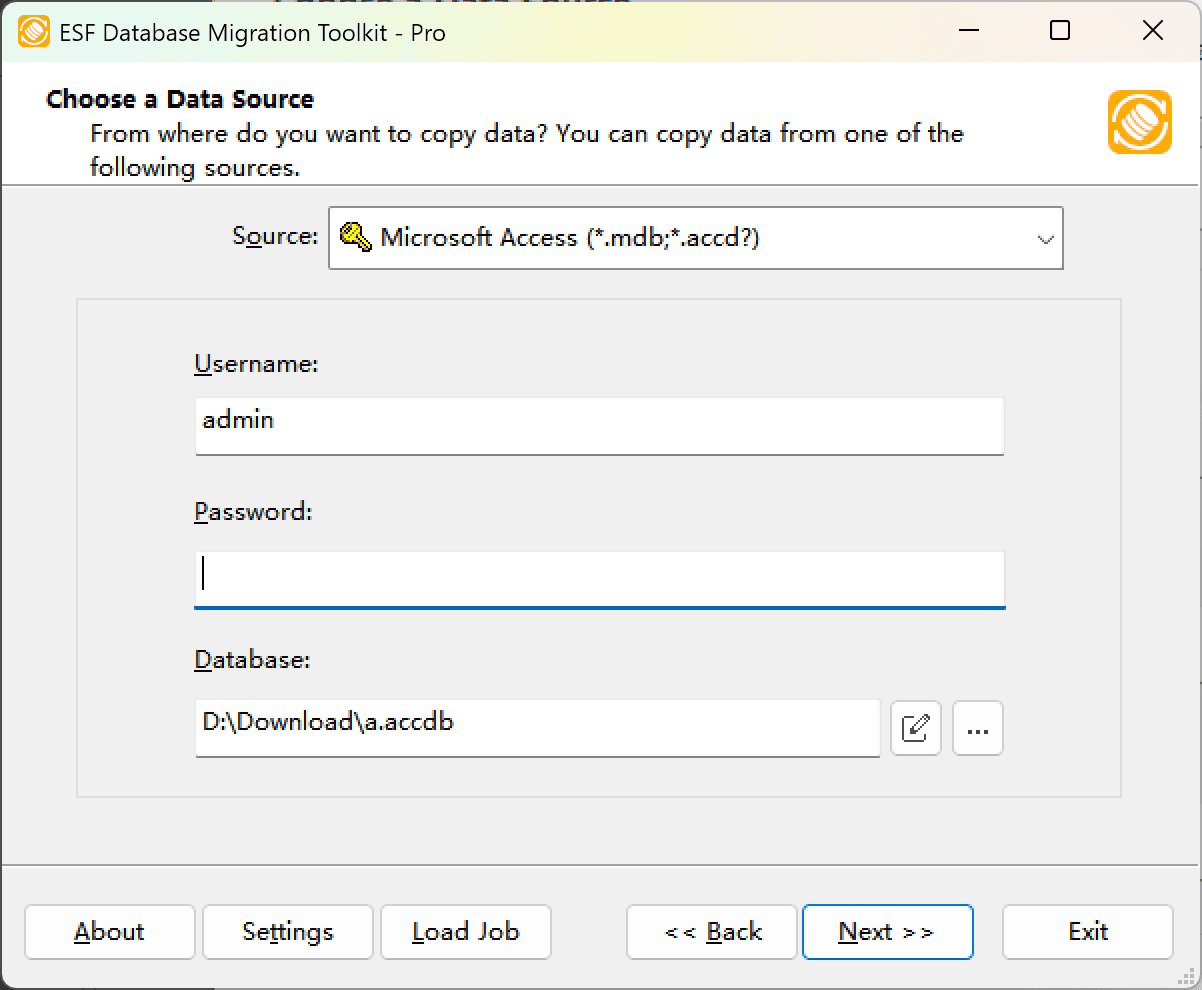
Fig. 1: Microsoft Access data source configuration - In the "Choose a Data Source" dialog:
- Select "Microsoft Access (*.mdb;*.accdb)"
- Browse for database file:
- Click the "..." button
- Select your .mdb or .accdb file
- Configure workgroup security (for system databases):
- Click the lock icon
- Set workgroup settings in the security dialog
- In the "Choose a Data Source" dialog:
-
Configure MySQL Destination
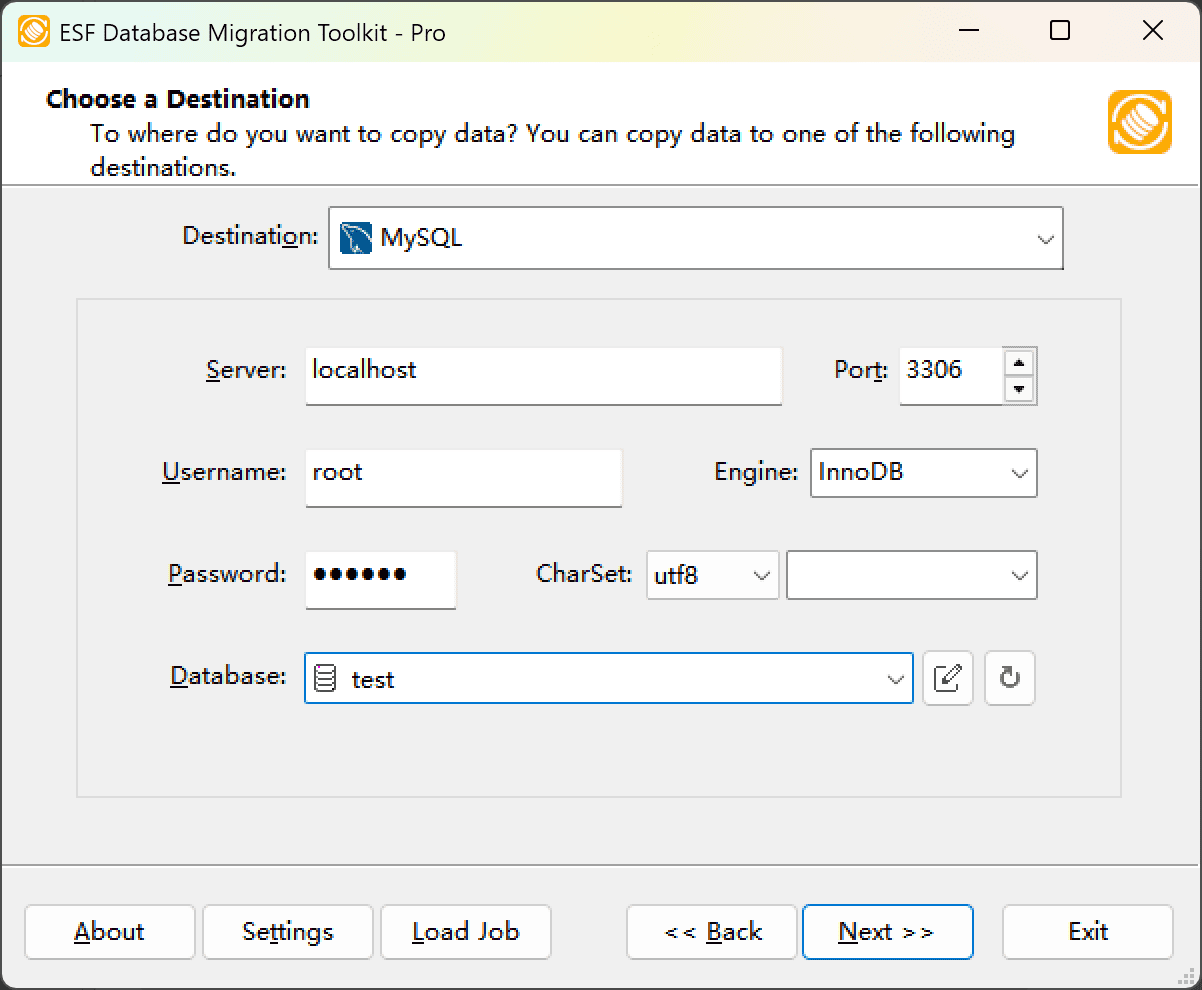
Fig. 2: MySQL destination configuration - In the "Choose a Destination" dialog:
- Select "MySQL"
- Enter connection parameters:
- Server name:
localhost(default) - Port:
3306(default) - Username and Password
- Server name:
- Optional configurations:
- Select a MySQL storage engine
- Specify character set (e.g.,
UTF-8)
- Database selection/creation:
- Click the Refresh button to list available databases
- Either:
- Select existing database from list
- Or enter new database name
- Note: New databases will be automatically created during migration
- In the "Choose a Destination" dialog:
-
In "Select Source Table(s) & View(s)" Dialog
-
Select migration objects: Choose tables or views to include in the migration.
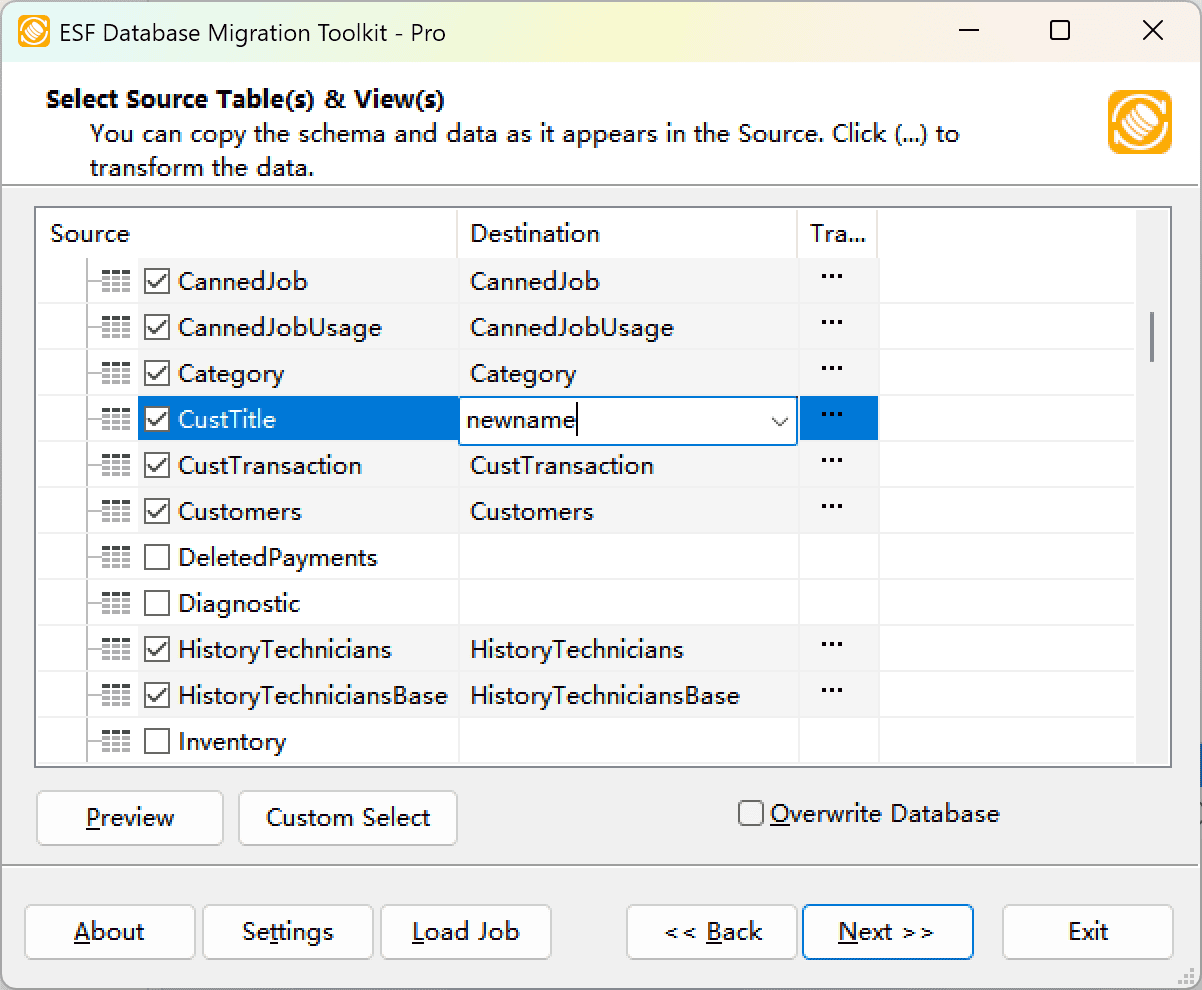
Fig. 3: Select tables and views -
Modify table structure: Click the ellipsis (...) button to access table options and schema adjustments.
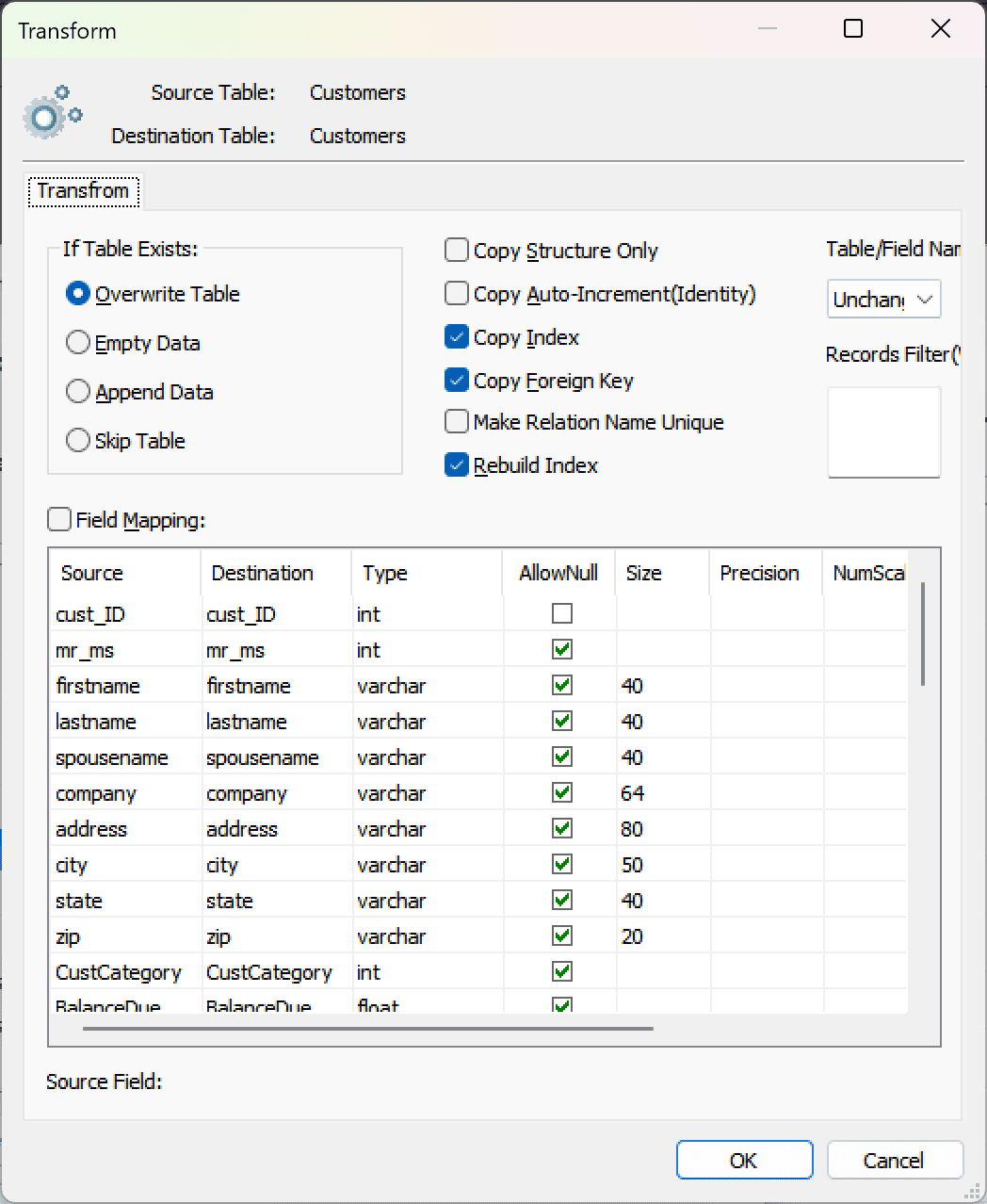
Fig. 4: Do transform -
Configure field mapping: In the Field Mapping options:
- Customize destination fields (name, data type, default value, comments)
- Select data transfer method:
- Overwrite Table (replace existing data)
- Empty Data (truncate before insert)
- Append Data (add to existing data)
- Skip Table (exclude from transfer)
- Apply data filters before transfer
-
Select migration objects: Choose tables or views to include in the migration.
-
Execution Dialog
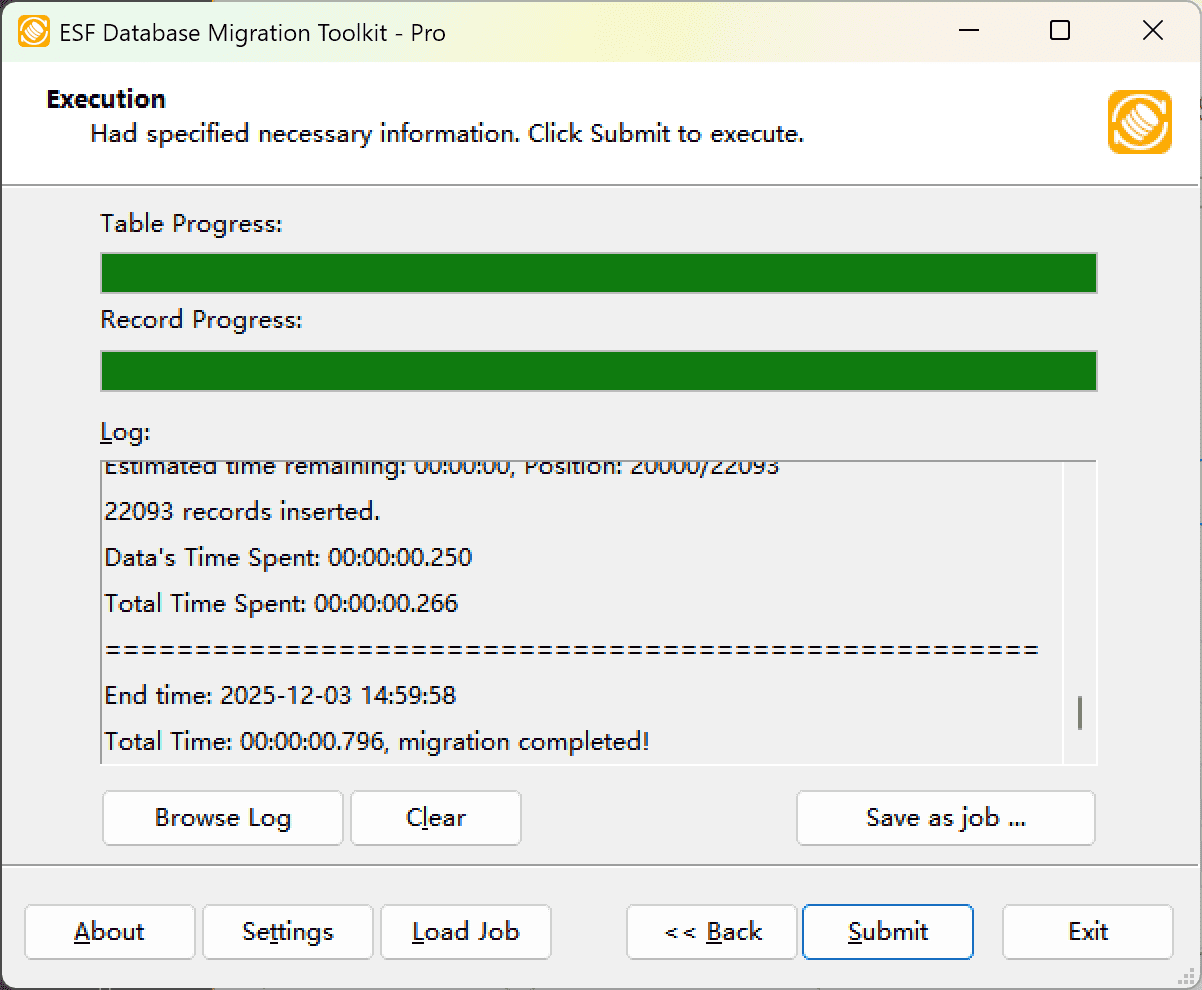
Fig. 5: Execute migration - Start migration: Click "Submit" to initiate automated data transfer from MS Access to MySQL.
- Monitor progress: Click "Browse Log" for real-time migration tracking, including issue resolution details.
-
Save configuration: Click "Save as job" to store settings for:
- Quick reloads of migration jobs
- Command-line execution (use:
dmtc.exe --helpfor parameter options)
-
Migration Completed
Congratulations! Your data migration from MS Access to MySQL has finished successfully. This toolkit generates a comprehensive report for verifying migration accuracy. You can monitor progress as the automated process runs efficiently. For any questions or feedback, contact us – our team is ready to assist.